
Self-Driving Laboratories
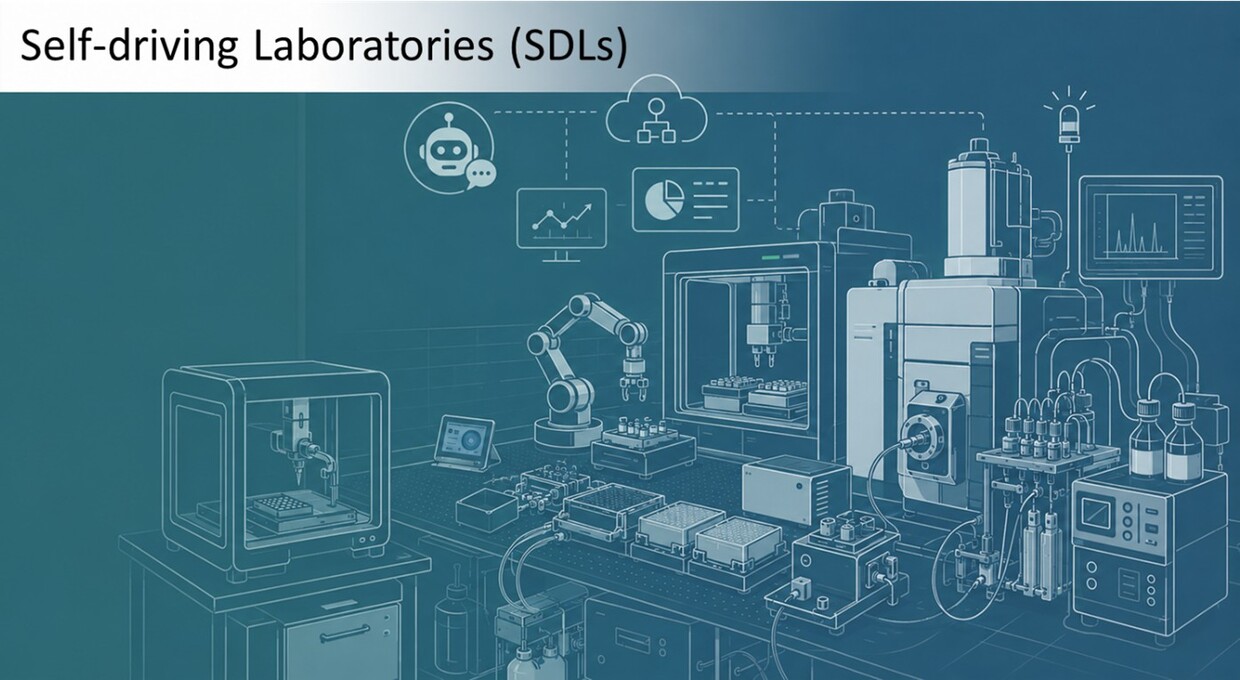
Our Self-Driving Laboratory (SDL) research develops autonomous experimentation platforms at the interface of laboratory automation, artificial intelligence, and (bio)process engineering, with the goal of accelerating the development and optimisation of biotechnological processes. By closing the loop between experimental design, execution, analysis, and learning, our self-driving laboratories plan and perform experiments, interpret the resulting data, and decide on the next steps autonomously, with minimal human intervention. This replaces slow, labour-intensive trial-and-error with data-driven campaigns that reach optimal conditions faster, more reproducibly, and with substantially fewer experiments.
At the core of our work is BioCAR, a modular SDL platform in which two complementary self-driving laboratories are operated from a single central web application. Through this web app, the platform coordinates robotic liquid handling, automated analytics, and machine learning within a unified software and data infrastructure, linking laboratory hardware—robotic arms, automated pipetting and assay systems, and analytical instrumentation such as liquid chromatography and mass spectrometry—with optimisation algorithms, including Bayesian optimisation, and an electronic-lab-notebook-based data backbone that ensures full traceability and reproducibility. We apply these capabilities across bioseparation, biocatalysis, and bioprocess development, for example to optimise solid-phase extraction and chromatographic purifications or to intensify enzymatic reactions in high-dimensional parameter spaces. Next to continuously expanding our SDLs, we are working to extend the central web application beyond these two platforms to the entire laboratory infrastructure, creating a unified digital ecosystem in which all instruments and workflows are accessible, controllable, and interoperable through a single interface.
Building on this foundation, we are making autonomous experimentation both more accessible and more reliable through AI-agent-assisted workflow design. Large-language-model agents help scientists translate their experimental intent into reusable, no-code workflow templates, which then execute deterministically, without an AI in the control loop. This separation of AI-assisted design from deterministic execution pairs the flexibility of natural-language workflow creation with the reproducibility and traceability that rigorous science demands. The integration of mechanistic modelling and digital twins couples automated experiments with process simulation, combining data efficiency with mechanistic understanding and enabling predictive, model-guided process development with minimal experimental effort.
SDL 1: Particle Processing
Our first self-driving laboratory is dedicated to particle processing and bioseparation. Built around a robotic arm that links automated liquid handling, plate-reader assays, particle characterisation by dynamic light scattering, and a custom filtration and vacuum station, the platform can autonomously execute multi-step sorption and purification workflows. It has been used, for example, to optimise solid-phase extraction for nucleic acid purification with silica magnetic beads, autonomously tuning buffer compositions to maximise yield and purity with minimal human intervention (https://doi.org/10.1002/aisy.202400564).
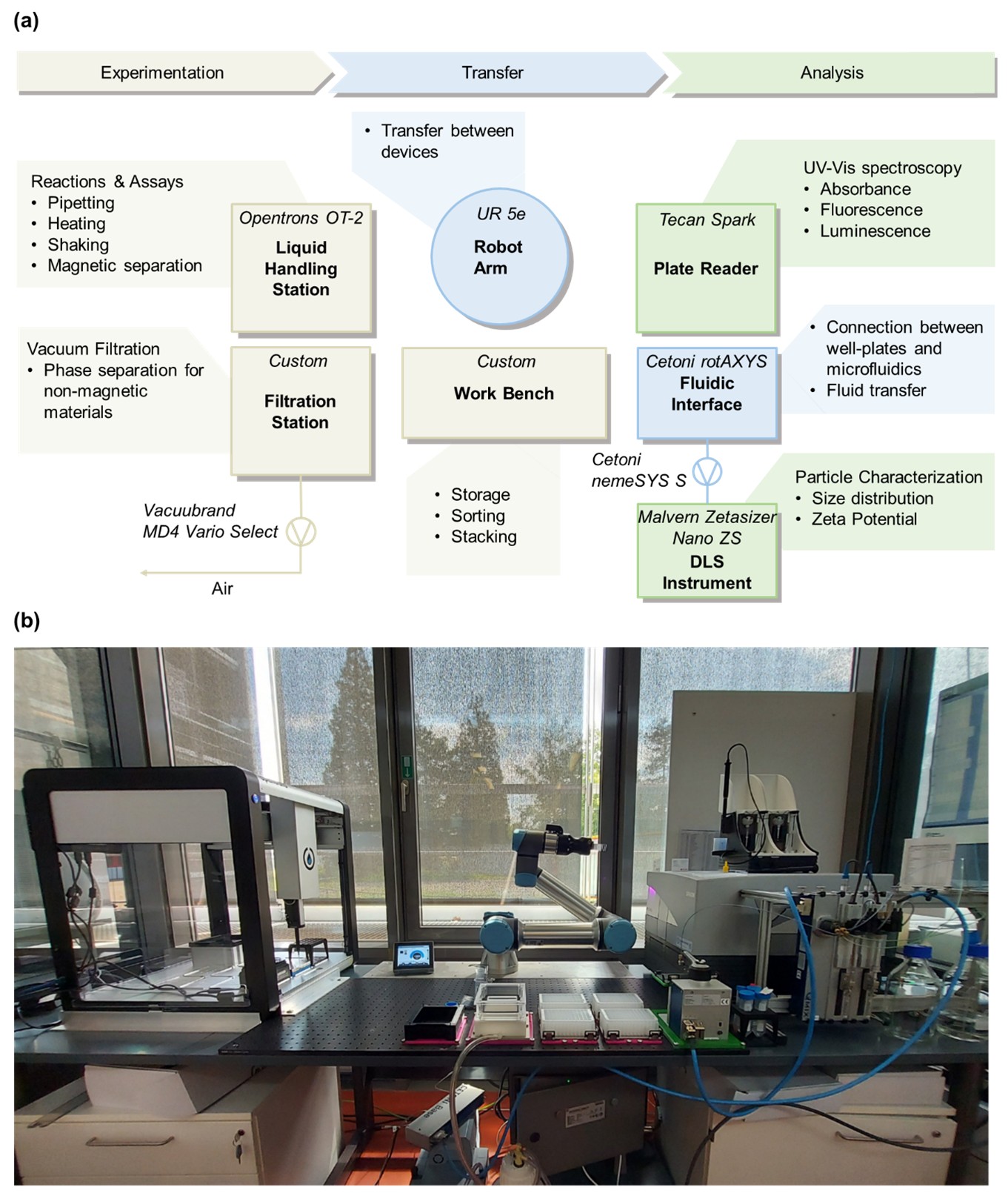
Figure 1: SDL 1 focused on particle-based processes. (a) Scheme (b) Photograph
SDL 2: Bioanalytics & Biocatalysis
Our second self-driving laboratory focuses on bioanalytics and biocatalysis. Two collaborating robotic arms integrate automated liquid handling, UV-vis spectroscopy, mass spectroscopy and liquid chromatography into a single autonomous environment. The platform supports applications ranging from the autonomous optimisation of enzymatic reactions in high-dimensional parameter spaces (https://doi.org/10.1002/bit.70038) to chromatographic screening, in which experimental purifications are coupled directly with mechanistic process simulation and data-driven optimisation.
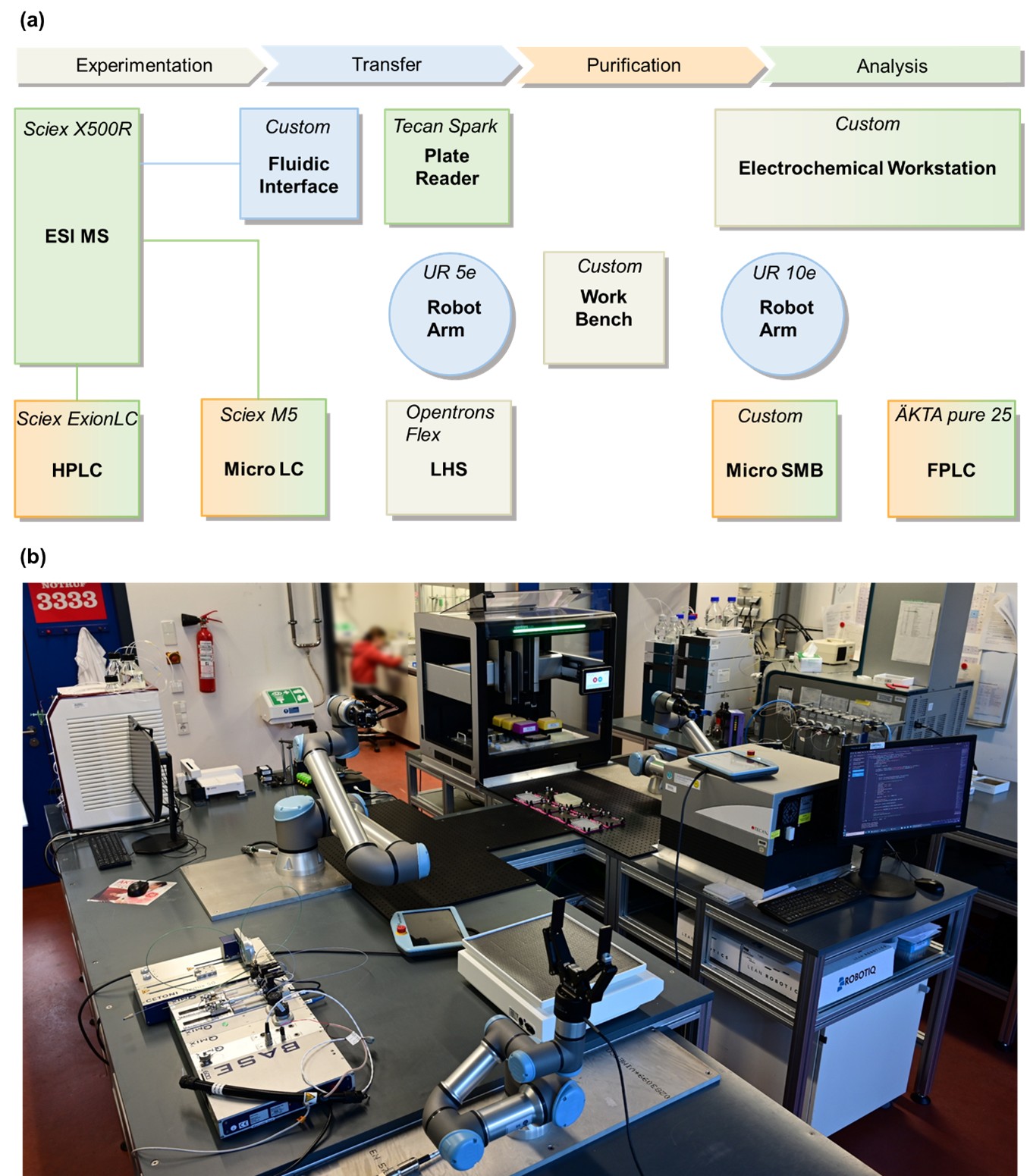
Figure 2: SDL 2 focused on bioanalytical and biocatalytical processes. (a) Scheme (b) Photograph
Web application (KAISA-LSE)
All platforms are operated through a central web application (named KAISA-LSE, Karlsruhe AI Science Agent App – Life Science Engineering) that serves as the digital backbone of our self-driving laboratories. From a single no-code interface, users build experiments from reusable, standardized templates, launch and monitor optimisation campaigns, and review results in real time. During template creation, AI agents help translate experimental intent into the underlying device protocols; once built, the templates execute deterministically, with the software coordinating the laboratory hardware, the optimisation algorithms, and an electronic-lab-notebook-integrated and machine-learning-ready data pipeline that makes every experiment traceable, reproducible, and FAIR by design. We are extending the app towards a unified ecosystem spanning the entire laboratory, to enable seamless interoperability between all instruments, end-to-end traceability from experimental design to result, and integrated workflows that flow effortlessly across devices lowering the barrier to automation and accelerating reproducible, autonomous research. Beyond the technology, our aim is to make everyday laboratory work easier, to unlock deeper insights from richer and more consistent data, and to give researchers back the time and freedom to focus on the science itself. Demo videos of KAISA-LSE can be accessed via: https://doi.org/10.5281/zenodo.20491095.
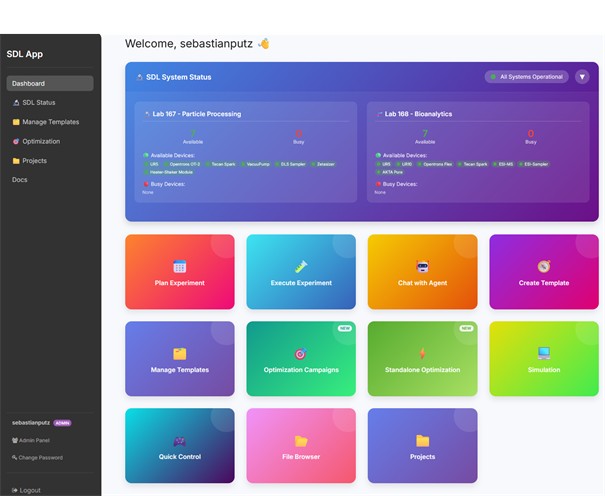
Figure 3: Main dashboard of the KAISA-LSE web application
Person in Charge
 |
M.Sc. |
Putz, Sebastian |
+49 721 608-23794 sebastian putz ∂does-not-exist.kit edu Geb. 330 / R. 233
|