
Bioinorganic and Analytical Chemistry
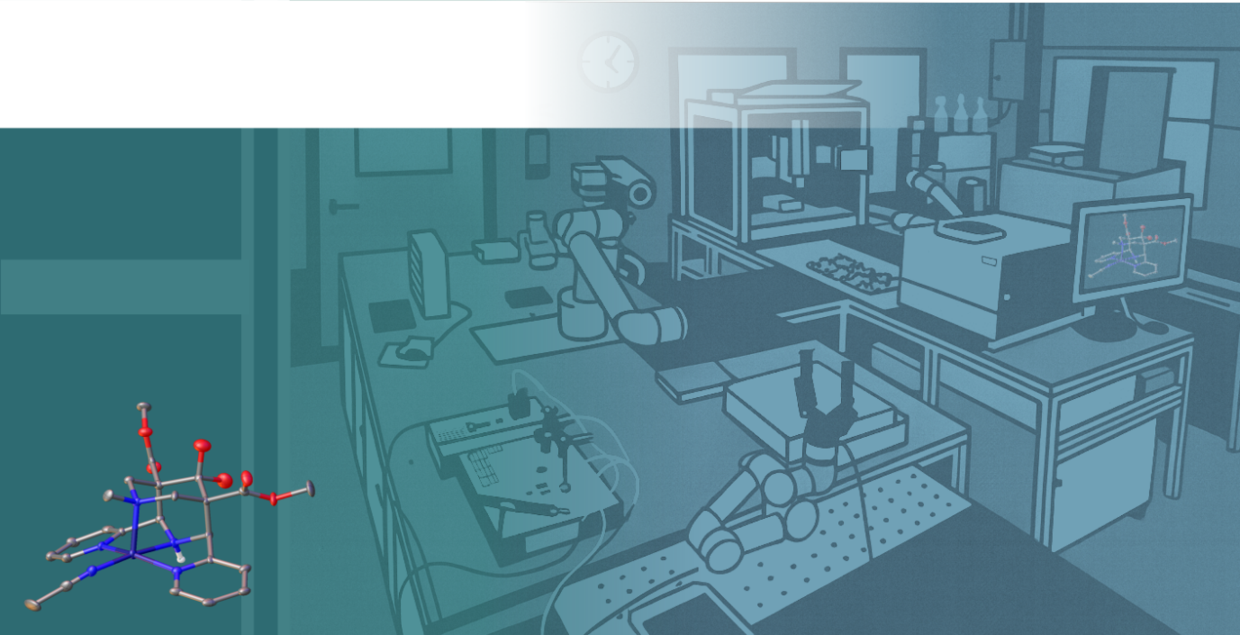
The Bioinorganic and Analytical Chemistry group investigates transition-metal catalysis and advanced analytical methodologies at the interface of coordination chemistry, mechanistic understanding, and high-resolution chemical analysis. Our research centres on the development of bispidine-based ligand architectures, whose rigid backbone and precisely tunable substituents enable both the stabilisation of metals in unusual and highly reactive oxidation states and their functionalisation for diverse catalytic applications. A key focus lies on the activation and transformation of small molecules, where we explore structure–reactivity relationships and design catalytic platforms capable of mediating challenging bond-forming and bond-breaking processes.
In parallel, the group maintains a strong profile in analytical chemistry, with particular expertise in mass spectrometry. We cover the full spectrum of mass-spectrometric analysis, from targeted quantification to untargeted characterisation of complex mixtures, and routinely engage in method development for chemically demanding or highly heterogeneous systems. A central component of our analytical infrastructure is our Self-Driving Laboratory (SDL), which integrates automated sample preparation, high-throughput measurement-including mass spectrometry-and data processing. The SDL is being developed towards autonomous experimental workflows, enabling reproducible, data-driven chemical exploration with minimal human intervention.
In this context, we are expanding into liquid chromatography–based purification and the construction of digital twins of chromatographic processes, developing QSPR-driven retention-prediction models for biomolecules to accelerate and rationalise LC method development.
Team
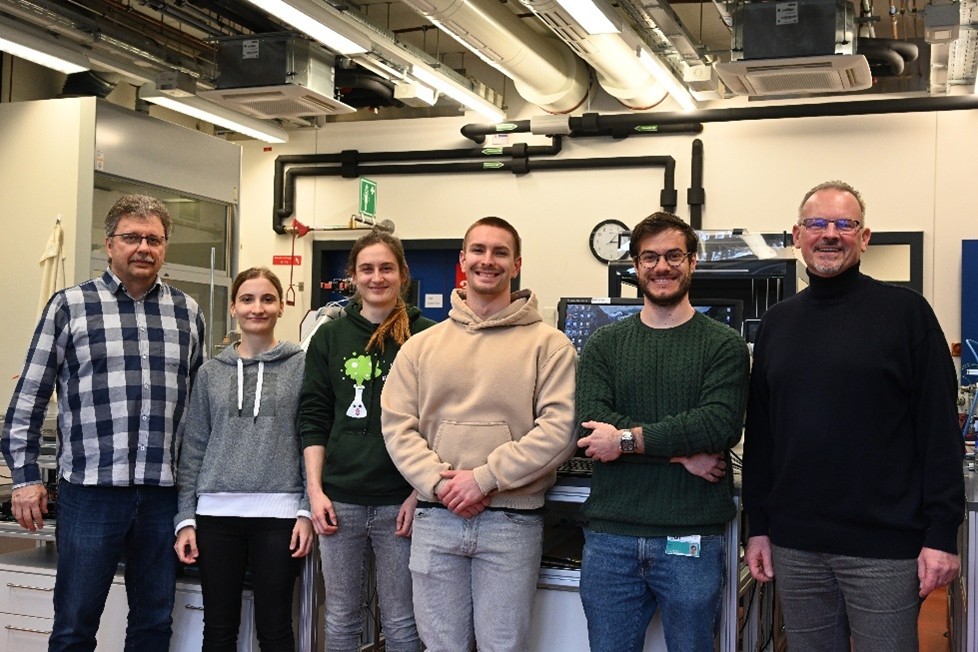
From left to right: Dipl.Ing Michael Nusser, Nadjana Schneider, Dr. Katharina Bleher, M.Sc. Sebastian Putz, M.Sc. Sebastian Castro, Dipl. Ing. Frank Kirschhöfer
Latest Research Topics
|
M.Sc. Sebastian Putz |
Autonomous experimentation for biotechnological applications: optimization of biosorption and biocatalysis processes using self-driving labs |
|
|
|
|
M.Sc. Sebastian Castro |
Electrochemical Cu-catalysed Particle-bed Reactor for CO2 to Acetate conversion |
|
M.Sc. Ahmed Khalil Mama |
Digital twins for polymer-based chromatographic resins |
|
Dipl.-Ing. Frank Kirschhöfer |
Improvement of the flavour profile of pea milk through enzymatic treatment Proteomics on, among other things, inhibitors of HDAC |
|
|
|
|
Dipl.-Ing. Michael Nusser |
Generation of an amino-acid profile of zebrafish |
A current list of possible thesis topics can be found here.
Group Leader
|
|
Dr. |
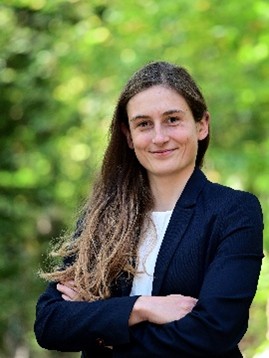
Bleher, Katharina |
+49 721 608-22986 Geb. 330 / R. 238 |
PhD-Students
|
|
M.Sc. |
Castro, Sebastian |
+49 721 608-23794 sebastian castro ∂does-not-exist.kit edu Geb. 330 / R. 237 |
|
|
M.Sc. |
Putz, Sebastian |
+49 721 608-23794 sebastian putz ∂does-not-exist.kit edu Geb. 330 / R. 233 |
|
|
M.Sc. |
Mama, Ahmed Khalil |
+49 721 608-23794 ahmed-kalil mama ∂does-not-exist.kit edu Geb. 330 / R. 233 |
|
Engineers |
|
|
|
|
|
Dipl.-Ing. |
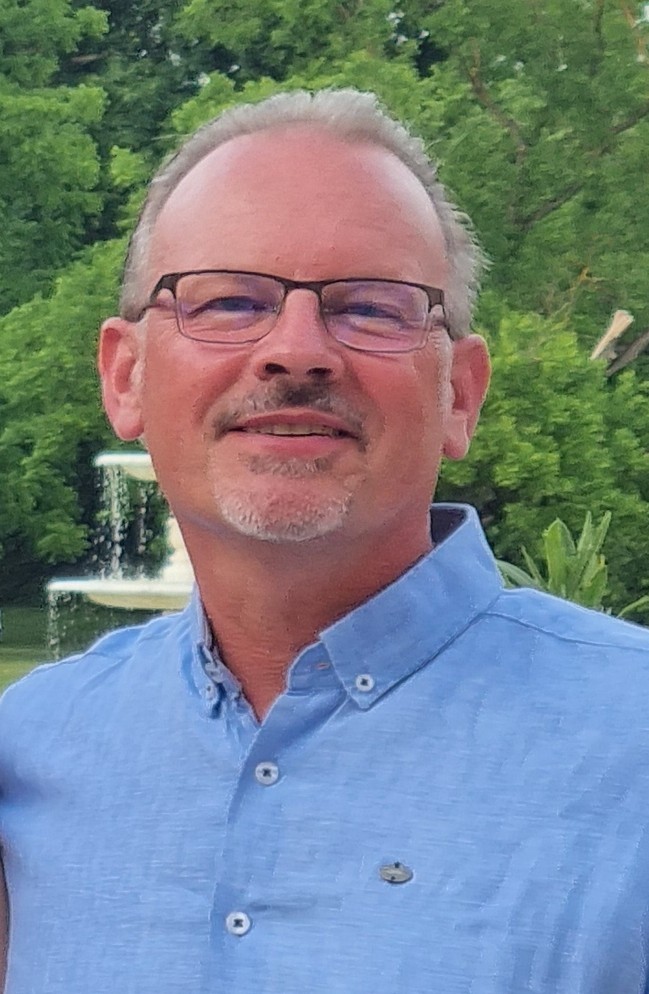
Kirschhöfer, Frank |
+49 721 608-26811 frank kirschhoefer ∂does-not-exist.kit edu Geb. 330 / R. 255 |
|
|
Dipl.-Ing. |
Nusser, Michael |
+49 721 608-26811 michael nusser ∂does-not-exist.kit edu Geb. 330 / R. 255 |



Research Topic
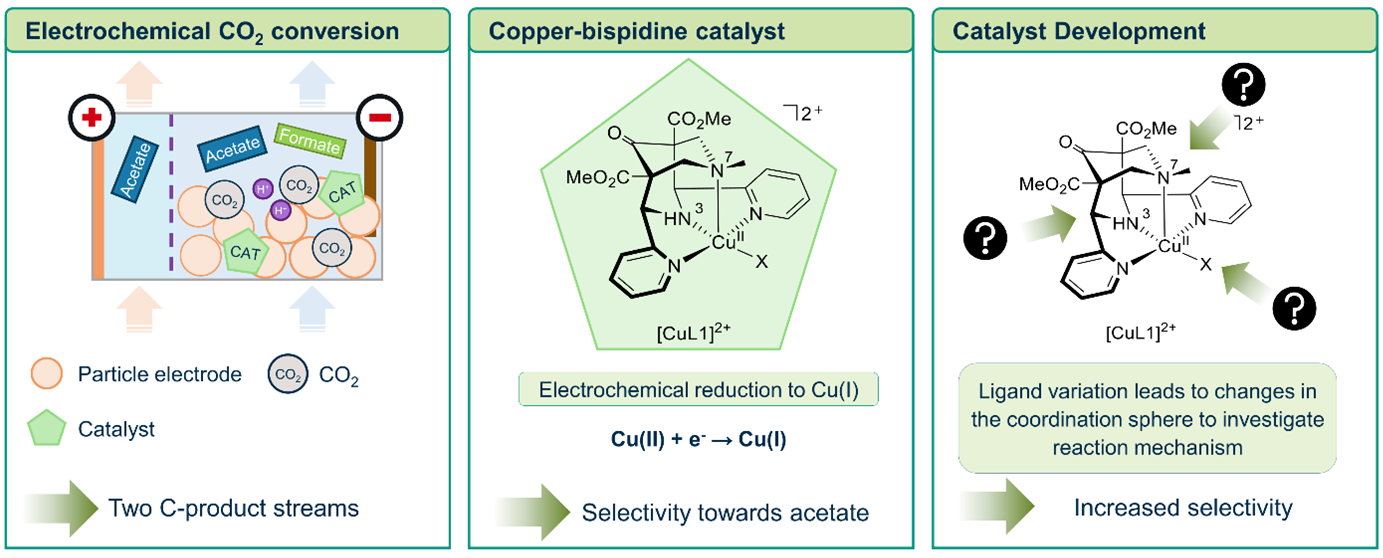
Catalyst-assisted electrochemical conversion of CO2 to acetate in a particle electrode reactor.
Description:
CO2 is to be made usable as a resource, for example in the form of C2 molecules as platform chemicals or as a nutrient basis for microbial conversions, in order to re-enter the value chain. This is achieved by electrochemically reducing it to acetate in a particle electrode reactor system. To increase the selectivity of the reaction and to reach industrially relevant product concentrations and efficiencies a copper-bispidine complex is added to the electrolyte. The bispidine scaffold is readily tunable, allowing the electronic and steric properties of the corresponding copper complexes to be systematically adjusted and enabling structure-reactivity studies for CO2 activation.
The focus of this project is on developing and optimizing the copper-bispidine catalyst for the CO2 reduction to acetate. The necessary experiments will be carried out in specially designed and 3D-printed electrochemical cells on a mL scale. The experimental setup and selected analytical workflows will be automated and interconnected to enable parallel catalyst testing. In parallel, the corresponding copper complexes will be synthesized and characterized, and their performance in CO2 reduction will subsequently be evaluated based on the distribution of carbon-containing products.
Person in Charge

|
M.Sc. |
Castro, Sebastian |
+49 721 608-23794 sebastian castro ∂does-not-exist.kit edu Geb. 330 / R. 237 |
Theses:
Theses can be assigned upon request if there is interest. The focus of the topics will be on catalyst development and process automation.
Research Topic
Description
Autonomous experimentation can dramatically accelerate the development of biotechnological processes by turning labor-intensive screening into a closed-loop workflow of plan → execute → analyze → learn. In this research topic, self-driving labs are developed and used to optimize biosorption and biocatalysis processes by systematically high-dimensional parameter design spaces and continuously updating the next experiments based on measured performance. The goal is to accelerate discovery and optimization by efficiently navigating the experimental design space with minimal experimental effort, while ensuring traceability and reproducibility through end-to-end automation, analytics, and ELN-connected metadata.
In a typical use case, one of the SDLs was applied it to intensify the activity of oxidative enzymes (a peroxidase and an engineered unspecific peroxygenase) across a challenging five-dimensional reaction space spanning pH, temperature, substrate and cosubstrate concentrations, and cosolvent fraction. To identify the best search strategy, we benchmarked a wide range of machine-learning and optimization algorithms in over 10,000 simulated campaigns on a data-driven surrogate model (Figure 1 (b)), then deployed the most efficient ones in the real lab. The resulting autonomous workflow (Figure 1 (a)) is a system that reaches optimal reaction conditions for different enzyme-substrate pairings far faster and with fewer experiments than conventional, manual approaches (Figure 1 (c)-(e)). (https://doi.org/10.1002/bit.70038)
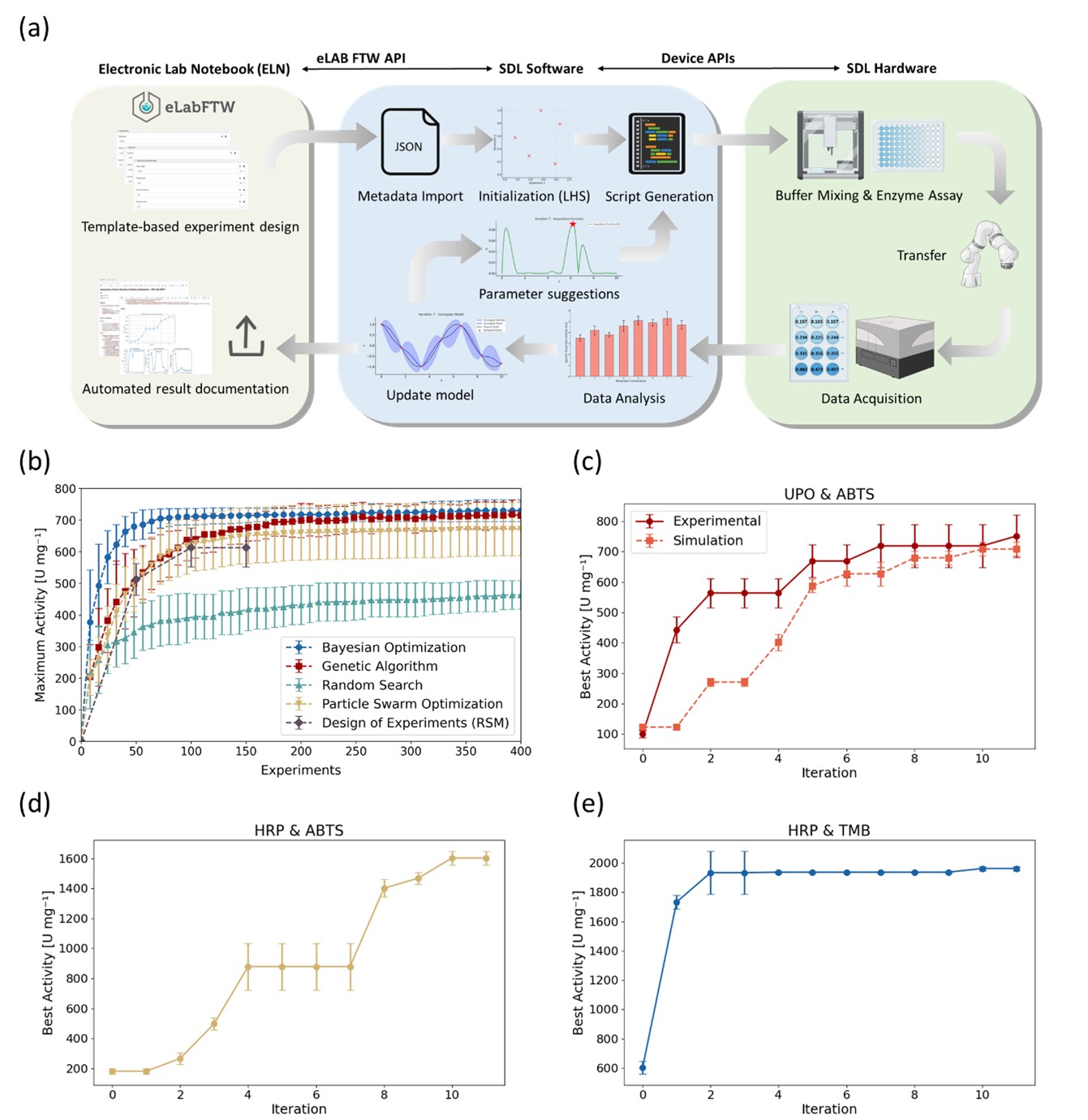
Figure 1: Autonomous, machine-learning-driven optimization of enzymatic reactions in the self-driving laboratory (SDL). (a) Closed-loop SDL workflow integrating the electronic lab notebook (ELN; eLabFTW), the SDL control software, and the SDL hardware. Template-based experiments designed in the ELN are imported as metadata (JSON), an initial experimental set is generated by Latin hypercube sampling (LHS), and device scripts are created automatically. The hardware carries out buffer mixing and the enzyme assay, transfers the samples via a robotic arm, and acquires the data; the results are analyzed, the surrogate model is updated, and new parameter suggestions are returned for the next iteration, while all results are documented automatically. (b) Benchmarking of optimization algorithms on the data-driven surrogate model, showing the maximum enzyme activity (U mg⁻¹) as a function of the number of experiments for the best investigated variants of Bayesian optimization, genetic algorithm, random search, particle swarm optimization, and a design-of-experiments response-surface model (DoE, RSM). (c–e) Autonomous optimization campaigns performed in the SDL for different enzyme–substrate systems, reporting the best activity (U mg⁻¹) reached at each iteration: (c) unspecific peroxygenase (UPO) with ABTS, comparing the experimental campaign (solid) with the corresponding simulation (dashed); (d) horseradish peroxidase (HRP) with ABTS; and (e) HRP with TMB. Abbreviations: ABTS, 2,2′-azino-bis(3-ethylbenzothiazoline-6-sulfonic acid); TMB, 3,3′,5,5′-tetramethylbenzidine.
Person in Charge
|
|
M.Sc. |
Putz, Sebastian |
+49 721 608-23794 sebastian putz ∂does-not-exist.kit edu Geb. 330 / R. 233
|
Research Topic
↵
Description
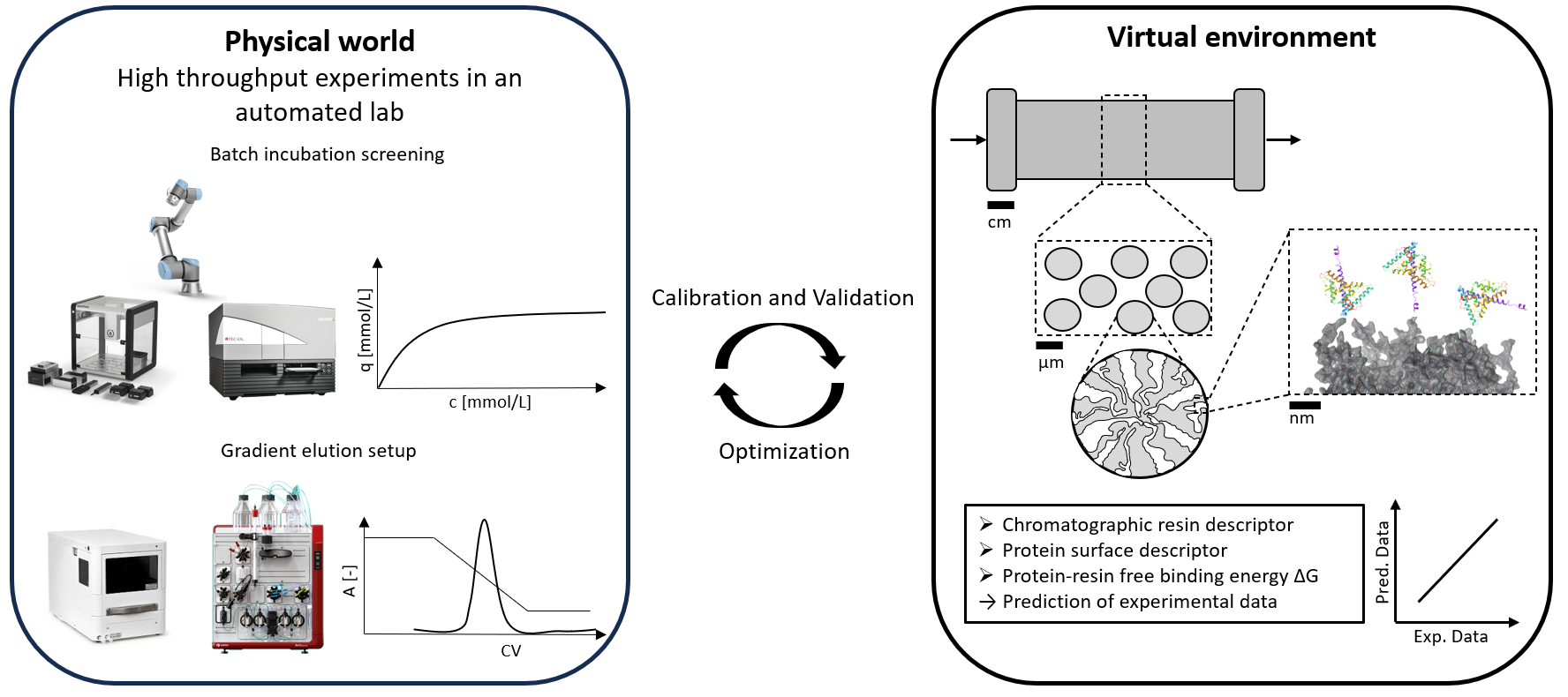
Liquid chromatography (LC) is a high-resolution separation technique that plays a central role in downstream processing, particularly in the purification of pharmaceuticals and biopharmaceuticals. LC can be applied to a broad range of molecular classes, from oligosaccharides and peptides to oligonucleotides and monoclonal antibodies, enabling the isolation and purification of target compounds from complex mixtures. In most LC methods, separation arises from differences in how analytes partition between the mobile phase and the stationary phase, leading to distinct retention times. Depending on the chromatographic mode, the stationary phase may consist of functionalized porous particles or polymer-based resins, and analyte–stationary phase interactions can include hydrophobic, electrostatic, hydrogen-bonding, and other specific contributions.
Developing LC purification processes typically requires extensive experimental screening and optimization, which can be time-consuming and resource-intensive. Consequently, there is growing interest in predictive approaches that can estimate retention behavior in advance to accelerate process development. One widely used framework is quantitative structure–property relationships (QSPR), which combines molecular descriptors with statistical or machine-learning methods to relate chemical structure to experimentally observed properties such as retention time.
In this PhD project, we will extend this approach by developing QSPR models tailored to biomolecules of high pharmaceutical relevance, with a focus on peptides, oligonucleotides, and proteins. These models will aim to support retention prediction and method development in LC-based purification workflows.
Person in Charge
|
|
M.Sc. |
Mama, Ahmed Khalil |
+49 721 608-23794 ahmed-kalil mama ∂does-not-exist.kit edu Geb. 330 / R. 233 |
Research Topic
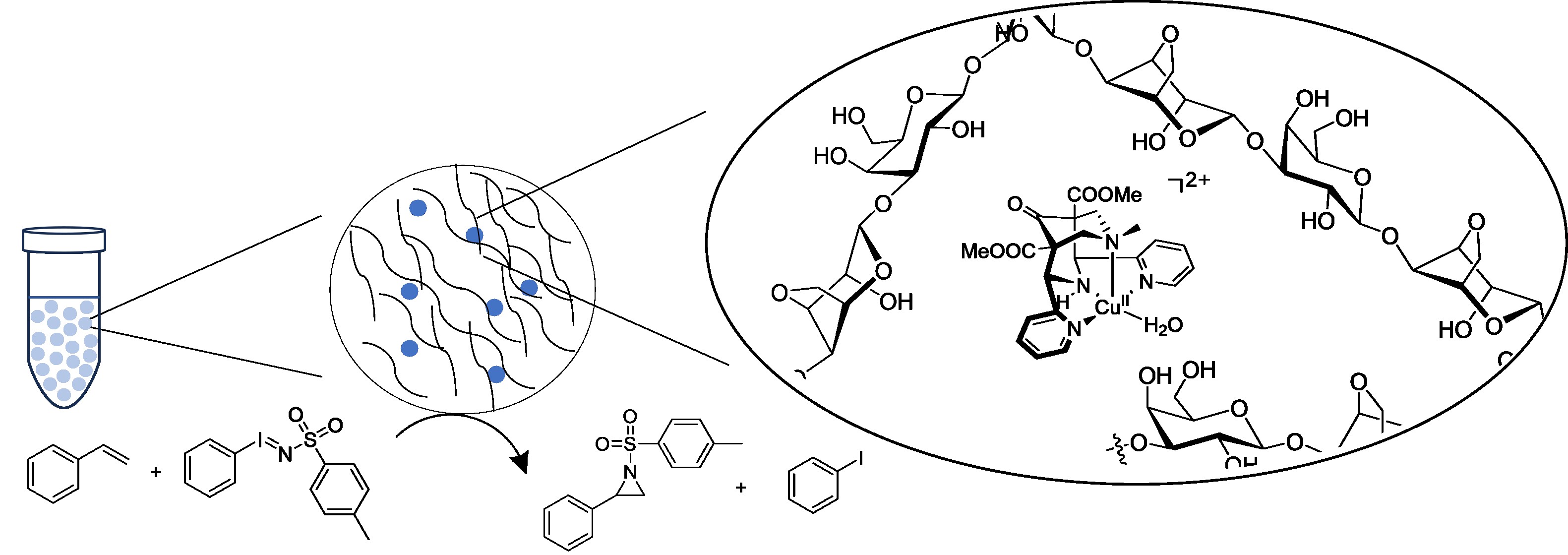
Immobilization of copper-bispidine complexes on support materials for aziridination reactions
Description
This project addresses the transition from homogeneous to heterogeneous catalysis. Following the mechanistic understanding of homogeneous aziridination catalysts, the next step towards technical applicability is their heterogenization. While homogeneous catalysts often exhibit high activity and selectivity, their separation from reaction mixtures and reuse remain challenging. Immobilization on solid support materials offers a promising strategy to improve catalyst recovery, recyclability and practical applicability, but introduces additional challenges such as changes in catalytic activity due to mass transport limitations, altered accessibility of the active site and potential leaching.
To address these challenges, different bispidine ligands and their corresponding copper complexes are synthesized, characterized and applied in the homogeneous aziridination of styrene as a model reaction to explore structure–reactivity relationships. Specific ligand modifications enable the introduction of anchoring groups for immobilization on a range of suitable support materials. Different immobilization strategies and carrier systems are evaluated, aiming to optimize loading, stability and performance of the immobilized catalysts in aziridination reactions. The properties of the support, the immobilization approach and ligand design are systematically investigated as key parameters for developing stable, non-leaching heterogeneous systems with immobilized copper-bispidine complexes.
Person in Charge
Nadjana Schneider
Research Topic
|
Bioinorganic and Analytical Chemistry
Instrumental Analytics: Mass Spectrometry (Focus) Proteomics, metabolomics, trace analysis, enzymatic interactions
Devices: SCIEX X500R (ESI-Q-ToF) Bruker UltraflExtreme (MALDI-Q-ToF) Agilent 8890-7250 (GC-Q-ToF)
|
|
Latest Research Topics: Hydrolysis and combined effect with pepsin for animal feed application 2025 Jan. Journal of Agricultural and Food Chemistry 73(2). DOI: 10.1021/acs.jafc.4c09409
Dynamic mechanical analysis of alginate/gellan hydrogels 2024 Dec. Carbohydrate Polymers 352(2):123180. DOI: 10.1016/j.carbpol.2024.123180
Characterisation of metal-organic frameworks (MOFs) in biological systems 2022 Angew. Chem. Int. Ed., 61. DOI: 10.1002/anie.202117144
Protein–inhibitor interactions of HDAC8 2022 Sep. 23(21). ChemBioChem 23(21). DOI: 10.1002/cbic.202200417 2020 Sep. 11; 26(58):13249–13255. Chemistry - A European Journal. DOI: 10.1002/chem.202001712
|